
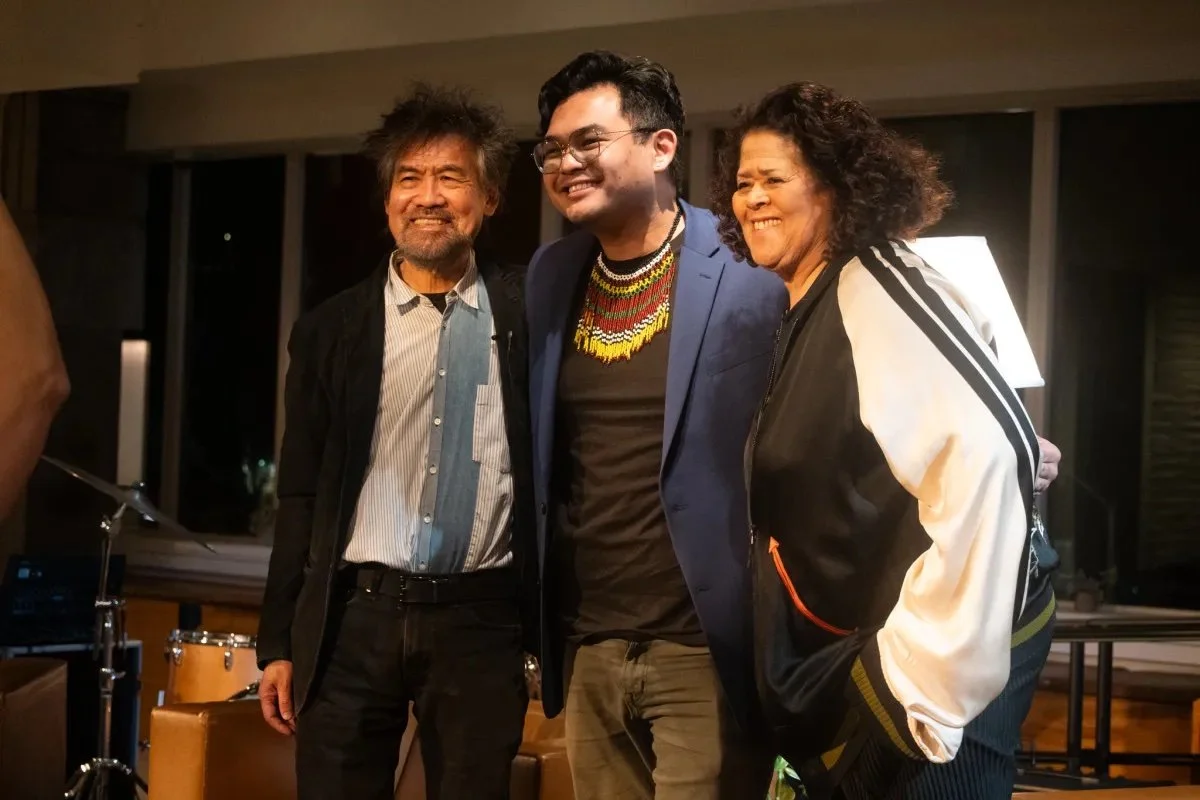
Playwrights Anna Deavere Smith and David Henry Hwang in conversation with Gaven D. Trinidad (center) at the Signature Theatre on February 26, 2026. (Johnny Knollwood photo)
Playwrights Anna Deavere Smith and David Henry Hwang were joined in conversation by moderator Gaven D. Trinidad for a discussion on the pair’s experiences navigating the theater world at the Signature Theater on Feb. 26. The actor and librettist discussed breaking down cultural barriers and representation in the medium throughout their storied careers as part of the first edition of “Artists on Artists,” a series at Signature Theater that seeks to connect audiences directly to the artistic community in Midtown Manhattan. The pair gathered with Trinidad in the lobby of the theater, which he highlighted as a vital resource for artists. The lobby space is large with lots of seating, a cafe and restrooms that are available for members of the artistic community to meet, work, and take a load off in the city.
Smith, a former artist in residence at Signature, is considered a pioneer of “verbatim theater,” and has appeared as an actress on shows that include “The West Wing,” and “Nurse Jackie.” Hwang, well known for works including “M. Butterfly,” is one of the first Asian American voices to land a Broadway production. The pair recalled the lack of diversity in stories as they rose through the ranks of theatredom. “All the material we were given was by white heterosexual males,” Smith said of her time studying as one of the first students to earn a Masters of Fine Arts in acting at the American Conservatory Theatre in San Francisco, recalling how she sat in the basement of her local bookstore, combing through books for scenes and plays written by voices more similar to her own. She remarked that Hwang was a pioneer in being not only one of the first Asian American playwrights to hit Broadway, but one of the earliest voices to provide an alternative perspective to those of white heterosexual men. Hwang credits growing up around a successful family of artists for allowing him to blossom in the field. “I saw people who looked like me as actors and directors and administrators,” he remembered. The conversation served as a reminder — the importance of free artistic expression amidst attempts by the Trump administration to “erase history and culture,” according to Hwang — urging audience members to keep creating. “They are really scared of what we do.”